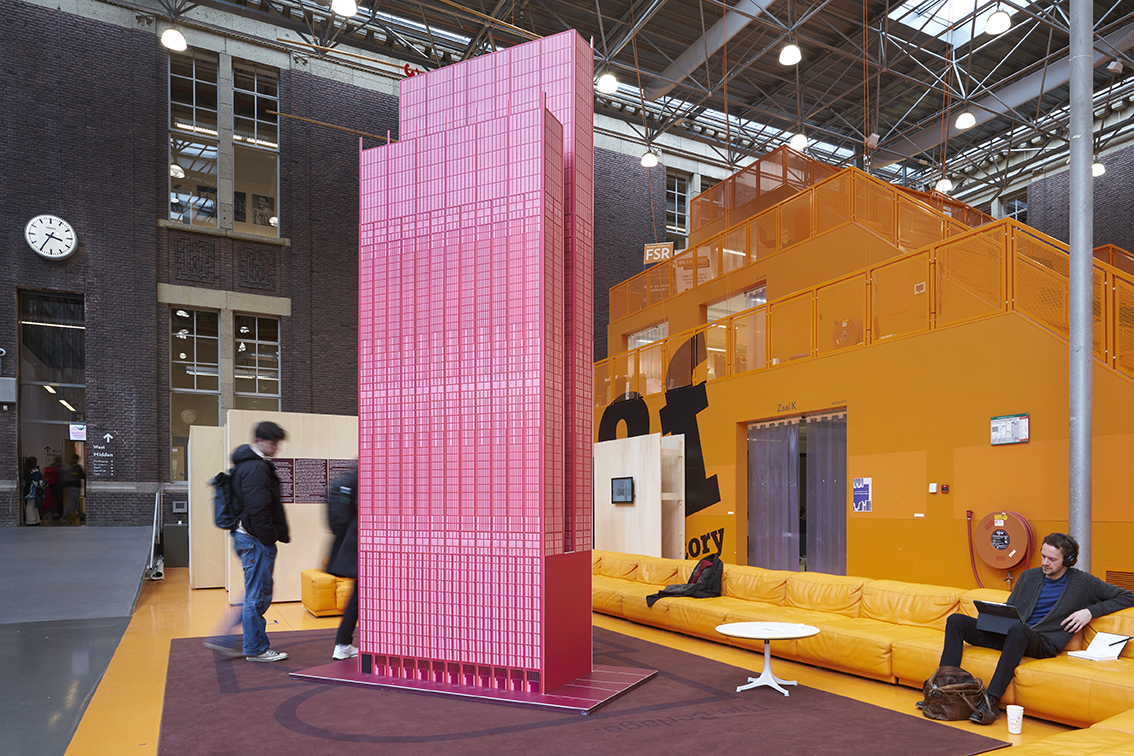
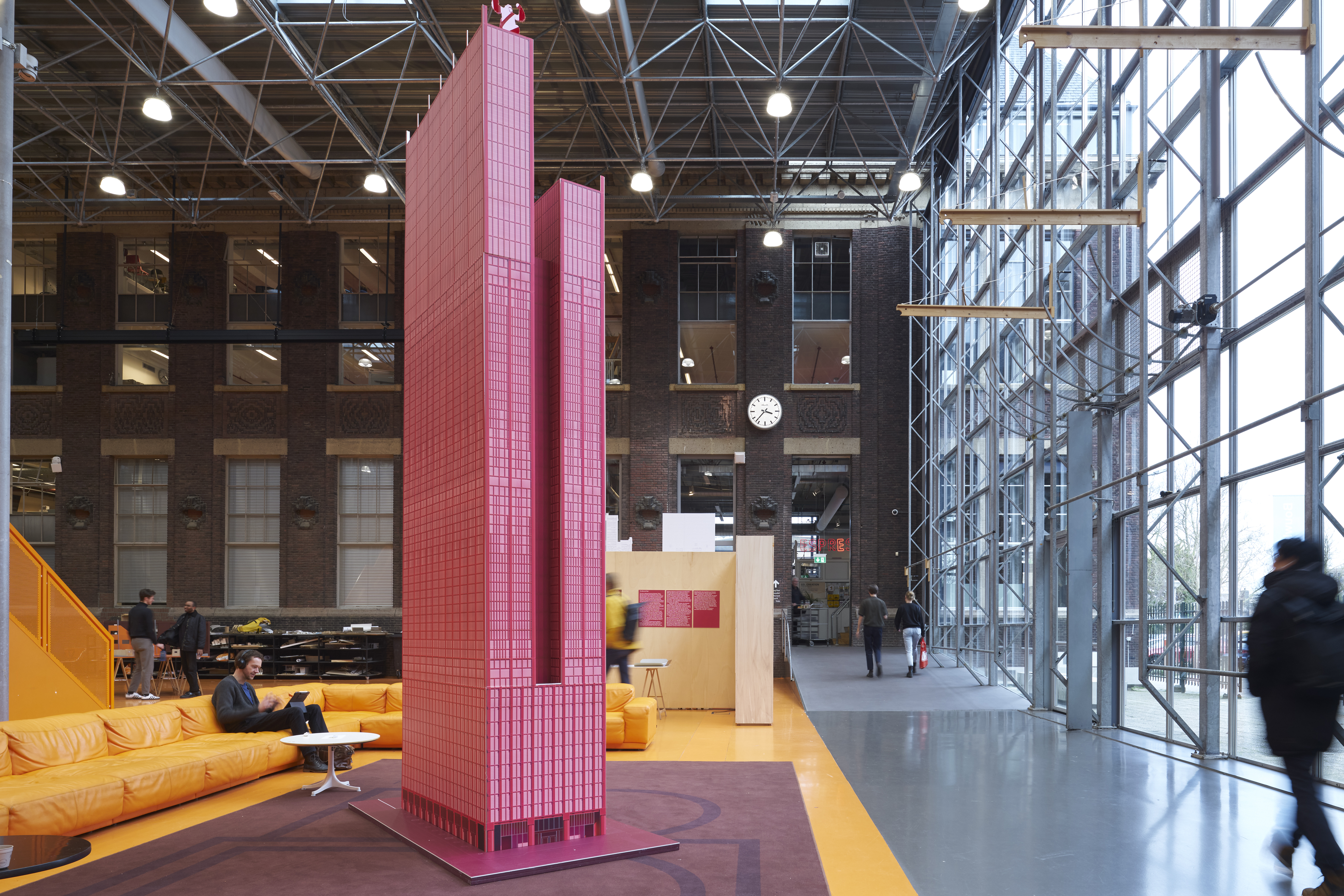
The Hotel is a collective project that studies the hotel, both as a building type and as a place of hospitality, through a collection of fourteen individual contributions inside one skyscraper. The project imagines hospitality as a realm of exchange that condenses the diversity of the city through an assortment of guests, staff, and the broader public. The hotel is a function of temporality and hospitality. The study questions the requirements for an architecture of hospitality to welcome, host, and entertain. Located in Midtown Manhattan—on the former site of Hotel Pennsylvania and adjacent to Penn Station—this project is a reflection on the metropolis of New York City. The Hotel consists of the design of the skyscraper as landmark—The Metropolitan—and the hotel as tenant—One Hotel.
A lot in 7th Avenue between 32nd and 33rd streets
The lot on Seventh Avenue between Thirty-Second and Thirty-Third Streets in New York City sits vacant. This is the former home of Hotel Pennsylvania, built in 1919 by the Pennsylvania Railroad Company to generate revenue and compete with the New York Central Railroad, which was designing Commodore Hotel to attract business travelers passing through Grand Central Terminal. Hotel Pennsylvania was designed by the renowned firm of McKim, Mead & White. Consisting of 2,200 guest rooms over twenty-two floors, it was the largest hotel in the world at the time. Facing Seventh Avenue—and Pennsylvania Station—a portico greeted guests and led into the building through a sequence of spaces culminating in the hotel’s lobby. Pennsylvania Station itself had been completed nine years before, in 1910, by the Pennsylvania Railroad Company and also designed by McKim, Mead & White. The rail company had first hoped for a hotel atop the station but they were eventually convinced otherwise. A Beaux-Arts masterpiece, the monumental station was built of ornate granite and marble surrounding a modern steel concourse. A large atrium with glass ceilings, along with glass-block walkways, brought light through the overlapping tracks to the lowest platform.
The lot on Seventh Avenue between Thirty-Second and Thirty-Third Streets in New York City sits vacant. This is the former home of Hotel Pennsylvania, built in 1919 by the Pennsylvania Railroad Company to generate revenue and compete with the New York Central Railroad, which was designing Commodore Hotel to attract business travelers passing through Grand Central Terminal. Hotel Pennsylvania was designed by the renowned firm of McKim, Mead & White. Consisting of 2,200 guest rooms over twenty-two floors, it was the largest hotel in the world at the time. Facing Seventh Avenue—and Pennsylvania Station—a portico greeted guests and led into the building through a sequence of spaces culminating in the hotel’s lobby. Pennsylvania Station itself had been completed nine years before, in 1910, by the Pennsylvania Railroad Company and also designed by McKim, Mead & White. The rail company had first hoped for a hotel atop the station but they were eventually convinced otherwise. A Beaux-Arts masterpiece, the monumental station was built of ornate granite and marble surrounding a modern steel concourse. A large atrium with glass ceilings, along with glass-block walkways, brought light through the overlapping tracks to the lowest platform.

One Hotel is a single operational entity comprised of fourteen hotel segments. To manage such a large and diverse hotel, One Hotel has partnered with fourteen hotel operators. Each segment is derived from a specific hotel type, serving a specific guest. The collection of segments includes:
A casino where gamblers are dealt a good time.
A boarding house that refreshes enlisted sailors.
A day hotel where lovers cross paths and share fleeting intimacies.
Capsules that treat cheapskates with a good deal.
A chain hotel that entices business travelers to extend their journey.
A family hotel that all members of the nuclear family can enjoy.
A homeless hotel that invests in children’s better future.
A migrant hotel that shelters those on long-term relocation.
A residential hotel that is (almost) home to precariats on the move.
A love hotel where sex workers and customers can be intimate in a safe environment.
A wellness spa that blends sensory treatment with water-enhanced tranquility.
A resort that indulges vacationers in a manicured paradise.
A single women’s hotel that supports women to live freely and confidently.
A boutique hotel that elevates aspirants’ real life and online presence.
A casino where gamblers are dealt a good time.
A boarding house that refreshes enlisted sailors.
A day hotel where lovers cross paths and share fleeting intimacies.
Capsules that treat cheapskates with a good deal.
A chain hotel that entices business travelers to extend their journey.
A family hotel that all members of the nuclear family can enjoy.
A homeless hotel that invests in children’s better future.
A migrant hotel that shelters those on long-term relocation.
A residential hotel that is (almost) home to precariats on the move.
A love hotel where sex workers and customers can be intimate in a safe environment.
A wellness spa that blends sensory treatment with water-enhanced tranquility.
A resort that indulges vacationers in a manicured paradise.
A single women’s hotel that supports women to live freely and confidently.
A boutique hotel that elevates aspirants’ real life and online presence.
An exhibition in the Orange Room
Thursday, January 23–Thursday, February 20, 2024
Orange Room
Orange Room
Contributors
Nicolaos Charalambous (CY)
Chaomin Chen (CN)
Sneha Gireesh (IN)
Thomas Gkikas (GR)
Ujal Gorchu (AZ)
Eliott Moreau (FR)
Ana Nuño De Buen (MX)
Kelly Olinger (US)
Maria Stergiou (GR)
Lenneke Slangen (NL)
Yuhe Tan (CN)
Felix Verheyden (BE)
Nien Heng Yang (TW)
Han Yang (CN)
Nicolaos Charalambous (CY)
Chaomin Chen (CN)
Sneha Gireesh (IN)
Thomas Gkikas (GR)
Ujal Gorchu (AZ)
Eliott Moreau (FR)
Ana Nuño De Buen (MX)
Kelly Olinger (US)
Maria Stergiou (GR)
Lenneke Slangen (NL)
Yuhe Tan (CN)
Felix Verheyden (BE)
Nien Heng Yang (TW)
Han Yang (CN)
With guidance by
Pavel Bouše
Benjamin Groothuijse
Salomon Frausto
Pavel Bouše
Benjamin Groothuijse
Salomon Frausto
Thesis Examination Committee
Dick van Gameren
Kees Kaan
Daniel Rosbottom
Paul Vermeulen
Nathalie de Vries
Dick van Gameren
Kees Kaan
Daniel Rosbottom
Paul Vermeulen
Nathalie de Vries